The Quiet Flow of Discovery: Is a European River Cruise Right for You?
Two river cruises can look almost identical online and still feel like very different trips. Here’s how to tell whether the format suits you, and what to look at before you choose.
By James “Jamie” Jarrell · Mythic Horizons Travel
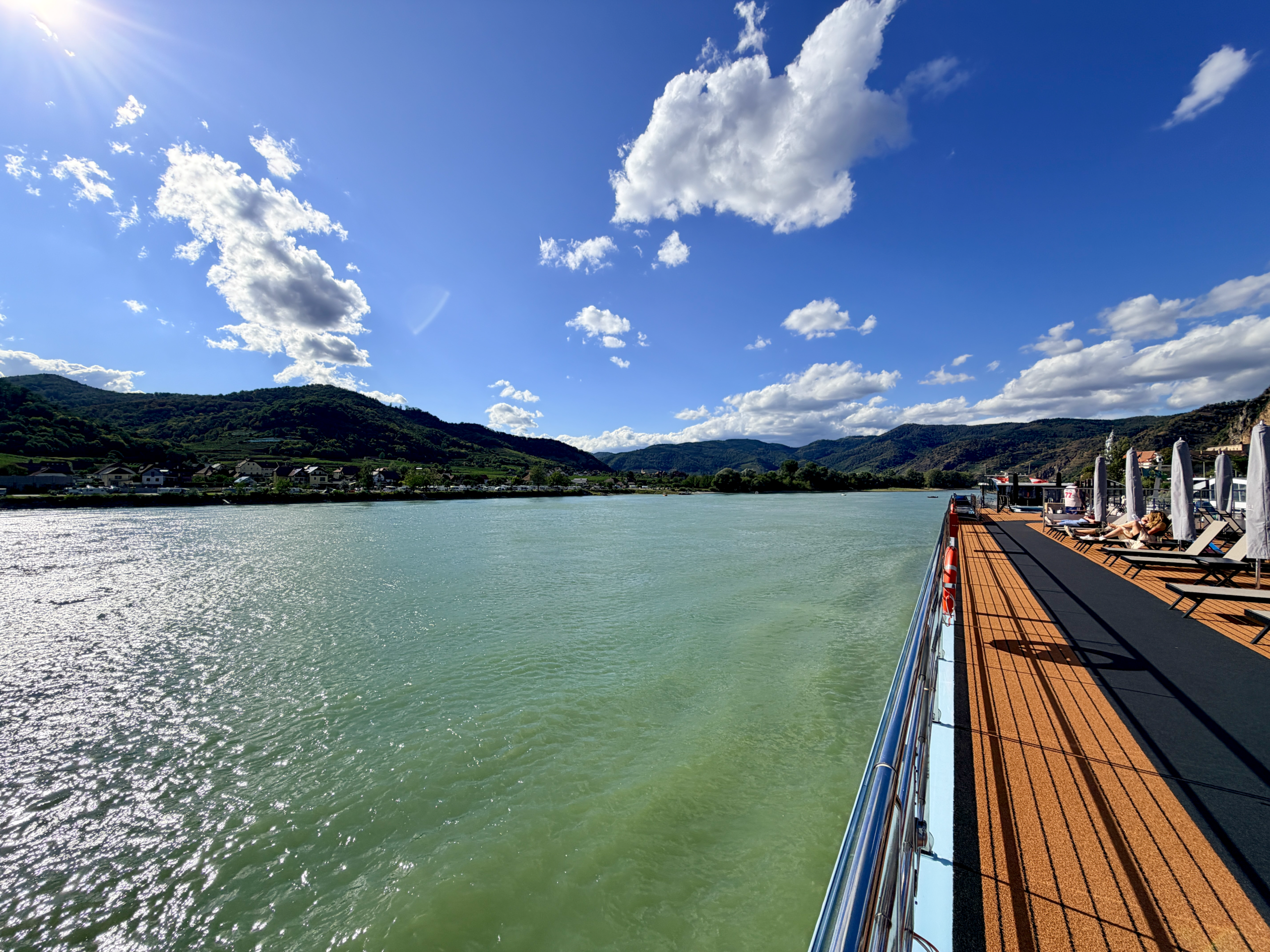
Some travelers love the idea of seeing Europe but dread the logistics of it. Four hotels in ten days means four check-ins, four rounds of repacking, and a lot of mornings spent working out how to get from one place to the next. A European river cruise appeals to people who want to see several places without living out of a suitcase.
The idea is simple. You unpack once, the ship moves while you sleep or eat dinner, and you wake up in a different town. That’s a real advantage, but it’s only part of the picture. A river cruise is a particular way of structuring a trip, and it suits some people far better than others. This article is meant to help you figure out which group you’re in.
River cruise vs ocean cruise: not the same thing
People often lump the two together, and they shouldn’t. An ocean cruise ship is a destination in itself, with thousands of passengers, multiple restaurants, big theaters, pools, and plenty of sea days. The ports are stops along the way, and many of them are industrial terminals a bus ride from anything interesting.
A river ship is closer to a small, floating hotel. Most carry fewer than 200 guests, and the scenery outside the window is part of the experience. The ship is the easy part. The places are the reason you’re there. Because rivers run through towns and cities, you can often dock close to the old center and, in some places, step off and be in a market square within minutes.
That changes what you’re paying for. On a river cruise, you’re not buying onboard entertainment or a resort. You’re buying a comfortable, simple way to reach a lot of places, and the quality of those places and how you spend your time in them is what makes or breaks the trip. If you’re weighing a river cruise vs an ocean cruise, that’s the question to start with: do you want the ship to be the destination, or the way you get to it?
Why the itinerary matters more than the ship
One of the things I’ve learned from river cruising is that the ship matters, but the itinerary usually matters more.
Two sailings on the same river can look nearly identical in a brochure and play out very differently. One docks in the center of town and gives you a free afternoon. Another docks on the edge of the city and moves you around by coach. One has an early start every day, another builds in slack. Some days have a single included tour with the rest left open, and others stack several options.
I pay close attention to where a ship docks, how long it stays, and how much independent time is built into the day. Those details rarely show up in headline descriptions, but they shape how the trip actually feels. A river cruise itinerary that looks packed with stops can leave you with an hour in each place, while a slightly shorter one might give you a proper afternoon in the town you were most excited about.
This is also why working with a river cruise travel advisor can be useful. Comparing sailings side by side, down to docking locations and day-by-day pacing, is a very different exercise from comparing prices.
Who tends to enjoy river cruising
River cruising tends to work well for travelers who:
- want to see multiple towns and cities without packing and unpacking repeatedly
- prefer a quieter, more intimate onboard atmosphere to a big-ship environment
- like having some structure, with guided tours available but not mandatory
- enjoy history, architecture, food, and wine more than onboard entertainment
- want to travel with a partner, a group, or family without everyone having to coordinate their own logistics
- want to reduce hotel changes and luggage handling, while understanding that shore excursions can still involve significant walking
For many people, the biggest appeal is simply the rhythm. You see something in the morning, return to the ship for lunch, explore a bit more in the afternoon, and settle into a calm evening with the landscape sliding past.
Who may not enjoy it
It’s worth being plain about this. A river cruise isn’t automatically the better choice, and some travelers will be happier with something else.
It may not be the right fit if you:
- want nightlife, big-scale entertainment, or a lively social scene onboard
- want extensive resort-style amenities such as large pools, full spa complexes, numerous restaurants, casinos, or large-scale entertainment
- strongly prefer completely unstructured, independent days with no schedule built around ship departures
- are choosing purely on lowest price, since fare alone can hide meaningful differences in itinerary, inclusions, docking, and cabin design
None of this is a criticism of river cruising. It’s a matter of matching the structure to the person. Someone who wants to wander alone for a week with no fixed plans is probably better off traveling independently. Someone who wants a pool deck, casino, and a long list of onboard entertainment options is probably better off on an ocean ship.
Families and multigenerational travel
River cruising can work well for families and multigenerational groups, but it depends heavily on the sailing. Many river cruise lines are geared mainly toward adults, and some have age restrictions. Others offer designated family departures with programming for children and teens. This is one of the places where checking the specific sailing and cruise line matters a great deal, not just the river or itinerary.
When it does work, the format has real advantages for mixed ages. Unpacking once makes the logistics easier for everyone, and the ship gives family members a comfortable place to sit out an excursion or rest between outings.
That said, river cruising is not automatically easy for travelers with limited mobility. Gangways, stairs, cobblestones, rafting between ships, and walking-intensive excursions are common, so the specific ship and itinerary matter.
The smaller scale can also make it easier for families to spend time together in a way that very large ships sometimes make harder.
Cabin choices deserve attention here. Some ships offer connecting cabins or cabins that can accommodate a third person, and others don’t, which can limit how a group is able to book. If you’re traveling with several generations, it’s worth asking about cabin configurations early, since availability can be limited on any given sailing.
LGBTQ+ traveler comfort and inclusivity
Many LGBTQ+ travelers, couples, and families reasonably care about how comfortable they’ll feel on a given sailing, and it’s a practical question worth asking up front.
A few things are worth thinking about:
Supplier culture. Some cruise lines are openly welcoming and communicate that clearly. Others are more neutral. That difference is worth understanding, and it’s reasonable to ask how a supplier approaches inclusivity, including staff training and any hosted or group sailings.
Traveler fit. The other guests shape the onboard atmosphere as much as the staff do. Some lines draw a different mix of travelers than others, and that can affect how relaxed the environment feels.
Rooming questions. Bed configurations, cabin categories, and how a booking is handled can all matter, and it’s best to sort them out before you travel.
Destination context. A river cruise can pass through several countries in a week, and attitudes and legal environments vary from place to place. Some travelers feel completely at ease everywhere along the route. Others like to know in advance what to expect and plan how they spend their time ashore. Both approaches are reasonable.
A consistent onboard environment. One real benefit of a river cruise is having the same space to return to each evening. That stability can make it easier to enjoy a mix of destinations without having to reassess your comfort at each new hotel.
None of this needs to be treated as a major concern. It’s mostly about asking good questions before you book, so that the sailing you choose matches what you’re looking for.
Choosing the river: three examples
Different rivers create very different trips, and there are far more of them than most first-time river cruisers realize. Europe alone has well-known options like the Rhine, Danube, Douro, Rhône, Seine, Moselle, and Elbe, and river cruising extends well beyond Europe too. I’ll use three popular European rivers here to show how much the choice can change the experience, but they’re illustrations, not a complete menu.
The Rhine suits travelers who want scenery and fairy-tale charm. The Upper Middle Rhine Valley is a UNESCO World Heritage landscape where castles and fortresses line the hillsides, and a Rhine river cruise can mean a lot of time simply watching the banks go by. It can be an appealing choice for first-time river cruisers and families.
The Danube appeals to people drawn to history and grand cities. Many Danube river cruise itineraries pass through imperial capitals like Vienna and Budapest, with plenty of music, architecture, and café culture. Because the route crosses several countries, it’s worth giving some thought to the different cultural and legal environments you’ll encounter ashore.
The Douro is a more focused experience, built around Portugal’s wine country. The landscape is dramatic, with terraced hillsides, and itineraries tend to center on food, wine, and visits to local wine estates. It suits travelers who enjoy that slower, tasting-focused pace.
Each of these rivers feels quite different from the others, and so do the rivers that didn’t make this list. Even within a single river, the itinerary, season, and ship can change the trip considerably. The right river depends on what you want to see, how you like to travel, and what kind of days you want to have, and it’s worth treating that as an open question rather than defaulting to the best-known names.
What to compare before choosing a sailing
If you’re choosing a river cruise, these are the details that tend to matter most:
- Itinerary and route: which towns and cities you visit, and how long you spend in each
- Docking locations: whether the ship docks in the center of town or farther out
- Time in port: how much of the day you actually have in each stop
- Excursion structure: what’s included, what’s optional, and how much independent time there is
- Pace: how early the mornings start and how much downtime is built in
- Cabin choices: layout, size, and whether the category suits your group
- Inclusions: what’s covered in the fare and what costs extra
- Cruise line fit: the overall style, clientele, and atmosphere of the line
- Season and river conditions: weather and water levels can occasionally affect sailing schedules, docking, and how parts of an itinerary are operated
- Pre- and post-cruise plans: arrival timing, hotel nights, and extensions
- Overall logistics: flights, transfers, and anything else that affects how smoothly the trip starts and ends
Looking at these together gives a much clearer picture than any single price or brochure description.
Is a river cruise right for you?
River cruising isn’t automatically better than independent travel or an ocean cruise. It’s a different structure, and for the right traveler it can be ideal: unpack once, see a lot, and spend your time on the places rather than the logistics. For others, a different approach will be a better match, and that’s worth knowing before you book.
If you’re considering a river cruise and want help comparing the options, the Start Planning page on my website is the best place to begin.